Plaque is a sticky, colorless film that constantly forms on your teeth. Most people don’t notice it, but plaque is one of the main reasons for cavities, gum disease, and bad breath. If not removed regularly, it can quietly damage your teeth and gums over time.
What exactly is plaque?
What exactly is plaque?
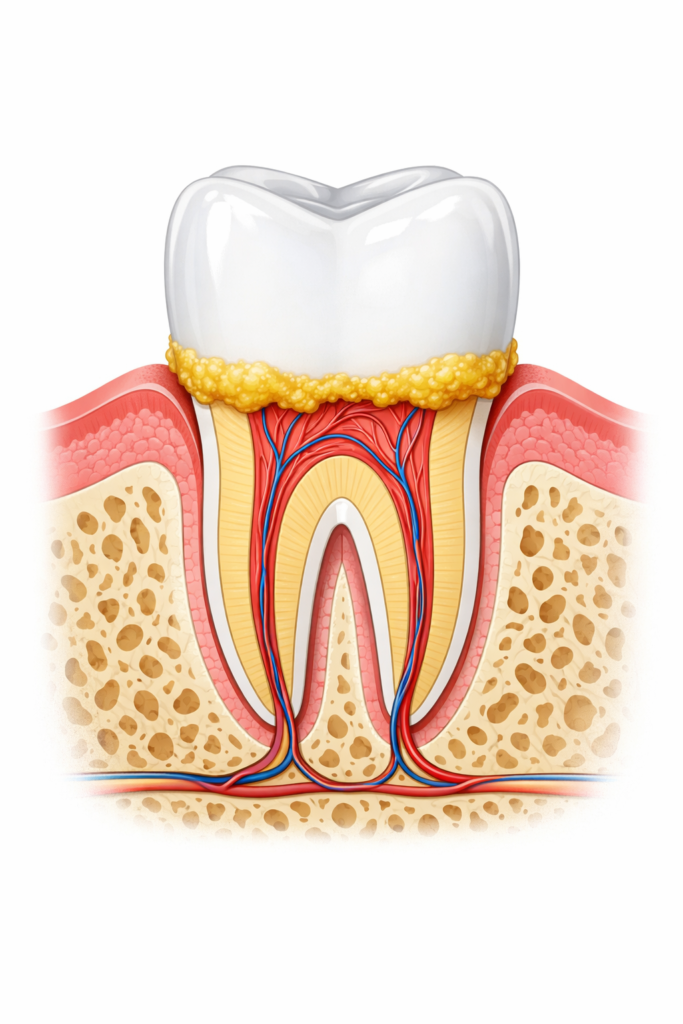
Plaque is made when bacteria in your mouth mix with saliva and tiny food particles left on your teeth after eating. This mixture forms a soft, sticky layer that easily attaches itself to the surface of your teeth and along the gum line.
What many people don’t realize is that plaque starts forming very quickly. Even within a few hours after brushing, bacteria begin building up again, especially if you snack or drink sugary or starchy foods.
If you run your tongue over your teeth and they feel fuzzy or sticky instead of smooth, that’s plaque. This is a clear sign that your teeth need cleaning.
How does plaque harm your teeth and gums?
Plaque bacteria produce acids that slowly wear down tooth enamel. Over time, this weakens the tooth surface and leads to cavities, even if you don’t feel pain right away.
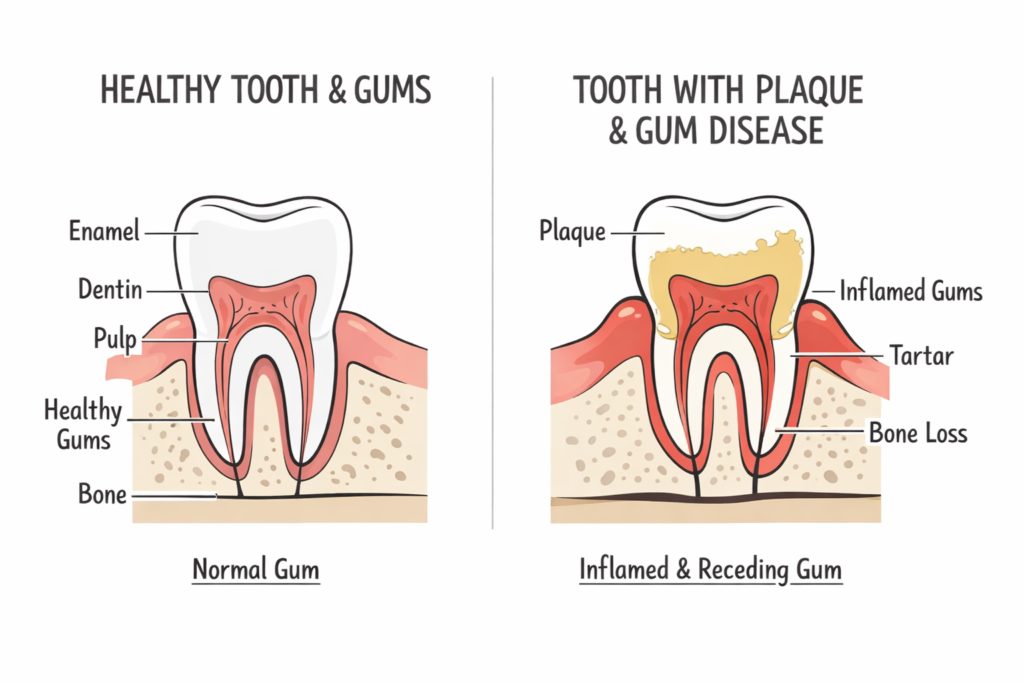
Along the gum line, plaque irritates the gums and causes inflammation. This makes gums appear red, swollen, and more sensitive than usual.
When inflamed gums are disturbed during brushing or flossing, they bleed easily. Bleeding gums are often one of the earliest signs that plaque is causing damage.
If plaque is not removed regularly, it hardens into tartar. Tartar cannot be removed by brushing alone and usually requires professional dental cleaning.
Plaque vs tartar: what’s the difference?
Plaque is a soft, sticky layer that forms on your teeth every day. The good news is that plaque is removable at home with proper brushing and flossing. Regular oral hygiene prevents it from causing damage.
Tartar forms when plaque is not removed and hardens over time. Once plaque turns into tartar, it sticks firmly to the teeth and cannot be removed with a toothbrush.
Tartar buildup irritates the gums and increases the risk of gum disease. This is why professional dental cleaning is important — only a dentist can safely remove tartar.
How to remove plaque effectively
Perfect. This H2 fits naturally and keeps your article educational, not salesy.
Here’s a clean, reader-friendly section you can paste as-is:
How to remove plaque effectively
Brushing twice daily is the most important step in removing plaque. Use a soft-bristled toothbrush and spend at least two minutes cleaning all tooth surfaces, especially along the gum line where plaque tends to build up.
Correct brushing technique matters as much as frequency. Gentle circular motions help clean thoroughly without damaging the gums. Brushing too hard can actually worsen gum irritation and bleeding.
Flossing removes plaque and food particles from between the teeth where a toothbrush cannot reach. Daily flossing significantly reduces the risk of gum inflammation and cavities.
Using a mouthwash can provide added protection by reducing bacteria in the mouth. A non-alcohol mouthwash is generally preferred, especially for people with sensitive or bleeding gums.
Conclusion
Plaque may seem harmless, but ignoring it can lead to serious oral problems. With good daily habits and regular dental care, plaque can be controlled before it causes lasting damage.
Learn how to protect your teeth daily in our oral health basics guide.